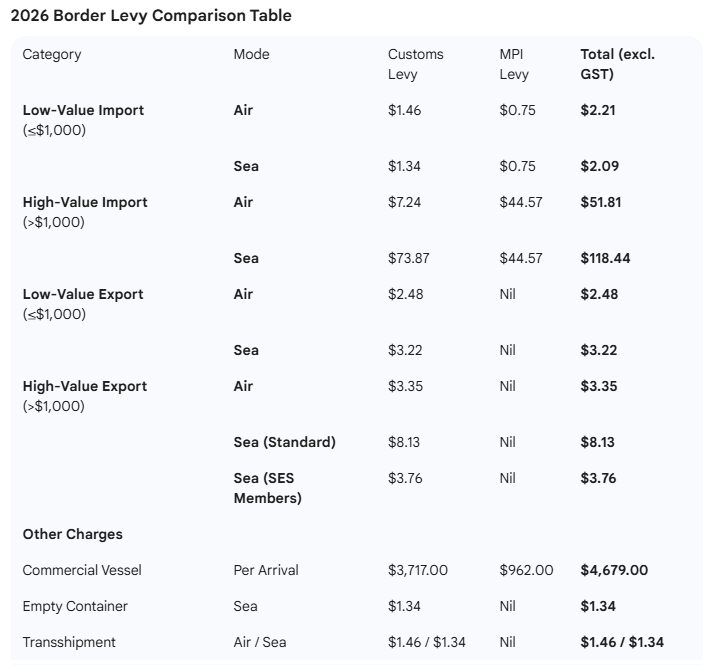
The New Zealand Cabinet has finalised a significant restructuring of the Biosecurity and Customs goods management levies. These changes move the border processing model toward full cost recovery, ensuring that charges cover the costs of managing goods entering and leaving the country.
The scale of the structural overhaul, particularly for low-value consignments and maritime operators, requires planning now to maintain stability in your landed costings.
The government’s intent is to eliminate taxpayer subsidies, placing the cost of border security and biosecurity directly on the movement of goods.
NEW LOW-VALUE IMPORT & EXPORT LEVIES
- The Impact: From 1 April 2026, the New Zealand government is introducing a significant shift in how low-value goods (consignments valued at or below NZD$1,000) are charged. Moving from a "per-report" to a "per-consignment" model, every individual package, including documents and trade samples, will now attract a levy. This structural change is specifically designed to ensure offshore e-commerce platforms contribute to border costs, but it will fundamentally increase total processing overheads for high-frequency shippers.
- Actionable Step: Review your high-volume lines now. By utilising Method Global’s 3PL centres in Auckland and Christchurch, you can consolidate international stock movements into singular large shipments (high-value entries) rather than thousands of small, levy-attracting parcels. Distributing from within both islands not only reduces these new border fees but also significantly reduces domestic inter-island freight costs for your final customer deliveries.
MODE-SPECIFIC (SEA vs AIR) COST ADJUSTMENTS
For the first time, Customs and MPI will differentiate rates based on whether cargo arrives via Air or Sea. This reflects the differing levels of resource required to clear goods across different port environments.
- The Impact: Sea freight imports will carry a higher combined levy than air freight for high-value goods, reflecting the complexity of maritime biosecurity and container inspection.
- Actionable Step: For 2026 budget planning, ensure your freight models distinguish between transport modes (Sea vs Airfreight) to capture these differing levy rates accurately.
NEW LEVIES: EMPTY CONTAINERS & TRANSSHIPMENTS
The new regulations extend the reach of border levies to categories previously untaxed or subsidised. This includes new charges for international transshipments and empty shipping containers, as well as a significant new Commercial Vessel Levy for vessel operators.
- The Impact: A combined Customs and MPI levy of $4,679.00 (excl. GST) will now apply to commercial vessels per arrival. These costs will likely influence carrier berthing strategies and regional surcharges.
- Actionable Step: We can help you audit your typical container flow, specifically empty returns and transshipments, to identify where these new touchpoint costs will materialise in your supply chain. Utilising Air Freight options may be more cost effective now than they were previously.
STRATEGIC PLANNING
In a changing regulatory environment, the most effective strategy is a proactive one. These changes represent the most significant update to New Zealand’s border charging structure in years. Our focus remains on ensuring these administrative shifts do not disrupt your logistical continuity.
For more detailed information for each type of import/export levy, see https://www.customs.govt.nz/customs-information-and-legislation/goods-clearance-fees/goods-fees-2026-changes
If you would like to review how these 2026 levy structures will affect your specific shipping lanes or landed costs, contact us at info@methodglobal.com.